When you picture a fire, you imagine flames and smoke. But a lithium-ion battery fire is something different: it can burn without a visible flame, reignite hours after it appears to be out, and release toxic gas that is often the real killer. In 2026, the international fire-safety community did something unprecedented — it gave these fires their own identity.
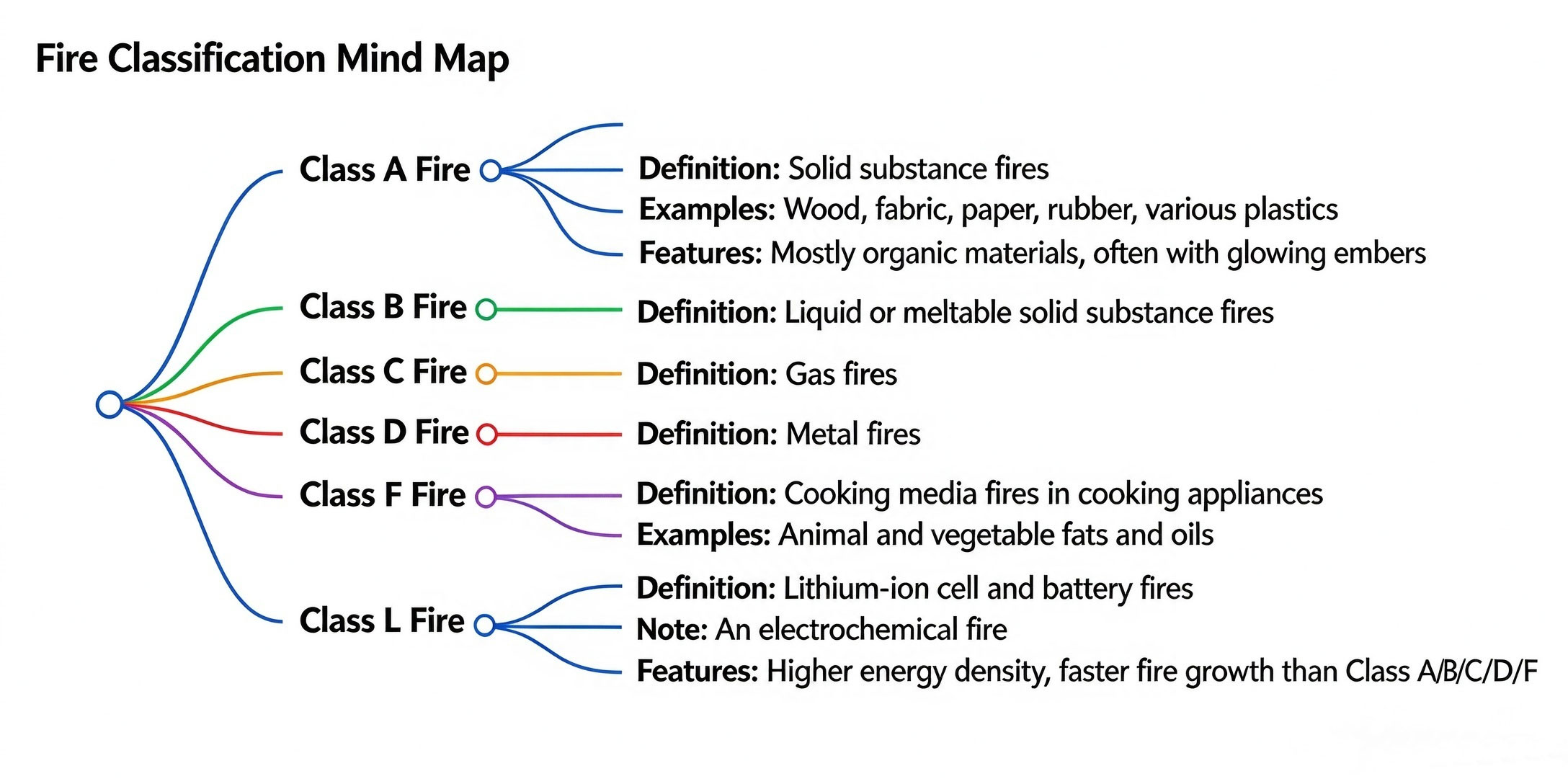
A new class is born: Class L In 2026, the international standard ISO 3941 was revised for the first time in nearly two decades, formally introducing Class L — a dedicated classification for lithium-ion battery fires. It was created because a battery fire behaves in a way that no traditional fire class could describe: it undergoes thermal runaway, an unstoppable chain reaction in which heat triggers more heat, spreading cell by cell. This is why a small e-bike battery can gut an entire apartment, and why a single storage cabinet can take out a warehouse.
This is not academic. Behind the new standard sits a wave of real-world events. In 2025 Europe recorded its worst wildfire season on record, and regulators responded across the board. The International Code Council has released the early 2027 International Fire Code battery provisions, adding a full chapter (Chapter 43) on lithium-ion batteries in buildings. Singapore revised its Fire Safety Regulations around EV charging. China issued new fire-management standards for lithium battery manufacturers. Every major market is tightening the rules — and every business, warehouse, and home that stores batteries is now facing a new kind of risk.
Why battery fires are so hard to fight A battery fire is not like a normal fire, and this is where old assumptions break down:
The lesson from the fire community in 2026 is simple: early detection and early suppression save what water and time cannot.
What businesses can do today Whether you run a server room, a charging station, an energy-storage cabinet, a warehouse, or a logistics fleet, the same principles apply:
1.Separate and space — keep high-capacity batteries away from exits and combustible materials.
2.Detect early — install heat/smoke monitoring around battery areas, especially unattended ones.
3.Choose the right extinguishing agent — for energized electrical and battery environments, use CO₂ or dry-powder systems designed for such hazards, and consider automatic suppression devices such as fire extinguishing balls for confined cabinets where no one is watching.
4.Never reopen blindly — after any battery incident, assume reignition risk and keep suppression equipment staged nearby.
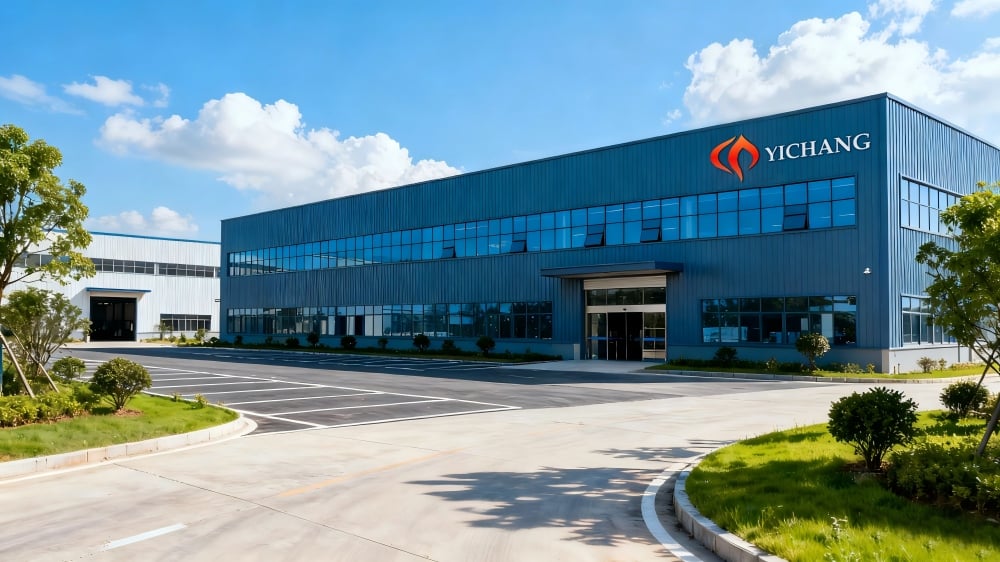
A factory perspective on the new reality As a manufacturer of fire-fighting equipment for both residential and industrial use, we have watched this shift closely. The rise of Class L is not just a classification change — it is a change in how the world buys and plans safety. Increasingly, our customers ask for suspended automatic dry-powder extinguishers for server rooms and storage cabinets, fire extinguishing balls for energy-storage units and charging piles, CO₂ extinguishers for electrical panels, and Class D powder extinguishers for metal and specialty industrial fires.
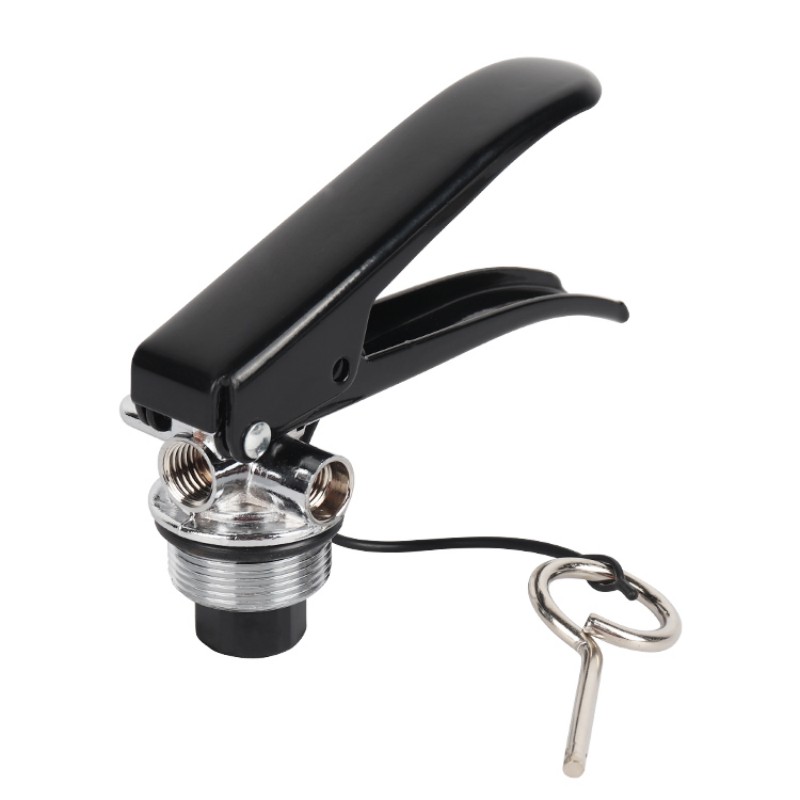
Our product range is built around this new landscape: portable ABC and CO₂ extinguishers from 1 kg to 12 kg, automatic suspension units, extinguishing balls, brass valves, pressure gauges, and the full line of fitting components — certified to CCCF, CE, and ISO9001, and customizable (OEM/ODM) to your market's standards.
Fire codes change. Risks evolve. What does not change is the need to be ready before the alarm sounds. As 2026's regulators make clear, the businesses that survive a fire are the ones that planned for it — with the right detection, the right suppression, and the right partner.
Have a battery-heavy facility, a storage area, or a growing EV ecosystem to protect? We'd be glad to help you choose the right equipment. Contact us today — because when it comes to lithium fires, minutes matter, and preparation matters more.



 EN


 Hot News