
 EN
EN
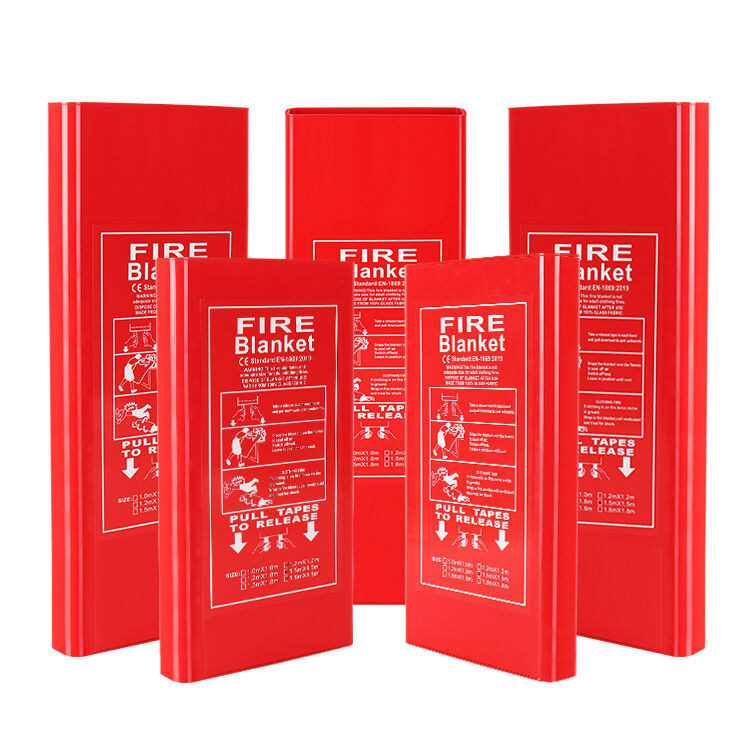
Teaching children about fire safety is one of the most important responsibilities a parent, guardian, or educator can take on. When a real emergency strikes, the knowledge and tools already present in the home can mean the difference between a minor incident and a life-altering tragedy. Among the most practical and child-accessible tools available for home fire safety is the Fire Blanket, a simple yet highly effective device that children can learn to recognize, respect, and eventually use under guided supervision.
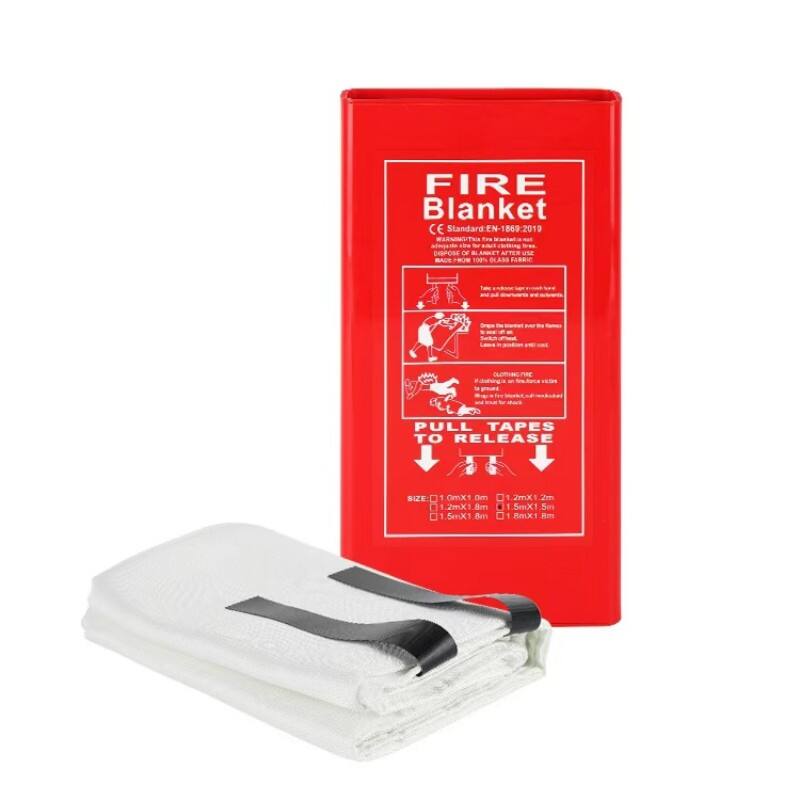
Introducing a Fire Blanket into your child's fire safety education gives them a tangible, non-intimidating starting point. Unlike a fire extinguisher, which requires strength and coordination, a fire blanket is lightweight, intuitive, and designed for quick deployment. By incorporating lessons about the fire blanket alongside broader fire safety discussions, families can build a layered understanding of emergency preparedness that genuinely empowers children rather than frightening them.
Why a Fire Blanket Is an Ideal Teaching Tool for Children
Simplicity That Matches a Child's Ability
One of the core reasons a fire blanket works so well as an educational tool is its straightforward design. Children do not need extensive training to grasp the concept: when a small fire starts, you cover it to cut off its oxygen supply. This basic principle aligns closely with what children learn in school science classes about combustion, making the connection intuitive and memorable.
A fire blanket is typically stored in a compact, wall-mounted pouch that even young children can identify as an emergency item. Teaching them to recognize the packaging color and placement in the kitchen or hallway creates a strong visual anchor for their fire safety memory. This kind of environmental awareness is a foundational skill in emergency preparedness education.
Because a fire blanket does not involve pressurized contents, loud discharge sounds, or chemical residue, it removes many of the sensory barriers that make children anxious about fire safety tools. Its gentleness as a teaching prop means you can allow children to handle it during drills without concern, which significantly increases their confidence and retention of key lessons.
Connecting the Fire Blanket to Everyday Scenarios
Children learn best when lessons connect directly to environments they already know. The kitchen, where most household fires originate, is the perfect setting for introducing a fire blanket. Explaining that a fire blanket lives near the stove for a specific reason helps children build a mental map of hazard zones and the safety tools that correspond to them.
You can walk through scenarios together: a pan catches fire, a dishcloth ignites near the burner, or a small electrical appliance starts to smoke. In each case, pointing to the fire blanket and explaining its role makes the abstract idea of fire safety concrete and actionable. Children who understand why a tool exists are far more likely to use it correctly in a real situation.
It is also worth discussing what a fire blanket cannot do, such as tackling large, spreading fires. Teaching children these boundaries is not about discouraging action but about building critical judgment. A child who knows the difference between a containable pan fire and a situation requiring immediate evacuation is far better prepared for the full range of fire emergencies they might encounter.
Age-Appropriate Fire Blanket Education by Stage
Early Childhood: Recognition and Awareness
For children between the ages of three and six, the primary goal is recognition rather than action. At this stage, introducing a fire blanket means showing them what it looks like, where it is stored, and the simple rule that it is not a toy and must only be touched in an emergency or during a supervised lesson. Establishing this boundary early creates healthy respect for the tool without generating fear.
Simple storytelling and picture books about fire safety can reinforce these lessons. When the fire blanket appears in a story as the item that saved the day, children form positive associations with using it correctly. Parents can complement this with a show-and-tell moment where the fire blanket is taken out of its pouch, unfolded, and then carefully refolded and stored again, all under close adult supervision.
At this age, the most important message is straightforward: if you see fire, tell a grown-up, and point to where the fire blanket is. Empowering young children to be communicators rather than solo responders is both developmentally appropriate and practically effective in a real emergency.
Middle Childhood: Understanding and Guided Practice
Children aged seven to eleven are ready for a deeper understanding of how a fire blanket works. At this stage, parents and educators can explain the science behind smothering a fire, covering the three elements of the fire triangle: heat, fuel, and oxygen. Removing one element, in this case oxygen, is what the fire blanket accomplishes when it is properly placed over a burning object.
Guided practice drills are highly effective at this age. Using a non-burning mock setup, such as a pot on a cold stove, children can practice pulling the fire blanket from its mounting, unfolding it using the recommended grip technique that protects the hands, and carefully laying it over the target. Practicing this sequence multiple times builds muscle memory that could be invaluable under stress.
This is also a good time to discuss the importance of never picking up a fire blanket that has already been used on a burning pan. The pan may still be extremely hot, and disturbing a smothered fire before it has fully cooled can reignite the flame. Teaching children to step back, alert adults, and resist the urge to check underneath the fire blanket prematurely is a lesson in patient, disciplined response.
Adolescence: Responsible Use and Household Leadership
Teenagers can take on a more active role in household fire safety, including understanding when and how to deploy a fire blanket independently. At this stage, education can expand into topics like inspecting the fire blanket periodically to ensure it is undamaged and within its recommended service life, replacing it after any use, and understanding that a used fire blanket should never be trusted as a reliable safety tool.
Adolescents can also help educate younger siblings, reinforcing their own knowledge in the process. Involving teens in creating a household fire safety plan, including the location of the fire blanket, evacuation routes, and emergency contact protocols, gives them a sense of ownership over the family's safety systems that carries long-term behavioral benefits.
Discussions about when not to use a fire blanket are equally important for this age group. If a fire has already spread beyond a single containable source, the priority should always be evacuation, not intervention. A fire blanket is a first-response tool for small, isolated fires, not a substitute for calling emergency services or following an established escape plan.
Conducting Effective Fire Blanket Drills at Home
Setting Up the Practice Environment
A successful fire blanket drill begins long before any simulation takes place. Start by ensuring that the fire blanket in your home is properly mounted in a clearly visible, easily accessible location. Children should be able to reach the mounting bracket independently, or know to call for an adult if they cannot. Walking through this physical setup together is the first step in making the drill realistic and useful.
Designate a specific day each season for a fire safety review that includes the fire blanket drill. Consistency builds familiarity, and familiarity reduces panic in real emergencies. During the drill setup, take the opportunity to check that the fire blanket is still securely stored, has not been opened or tampered with, and that no environmental changes in the room have made it less accessible than before.
Use calm, clear language throughout the drill. Avoid dramatizing the scenario to the point of causing distress, especially with younger children. The goal is confident, calm response, not heightened anxiety. Remind children that the fire blanket is one part of a larger safety system that includes knowing how to call emergency services and how to exit the building safely.
Teaching the Correct Deployment Technique
When teaching children how to deploy a fire blanket, the grip technique is critical. The standard approach involves grasping the two fabric tabs or handles on either side of the blanket and wrapping the top edge around the hands to shield them from radiant heat. Practicing this grip during drills ensures it becomes second nature, even when nerves are running high during an actual incident.
Children should practice moving toward the simulated fire source calmly rather than rushing, which risks knocking over the burning object and spreading the fire. The fire blanket should be held in front of the body as a shield during the approach, then carefully lowered over the fire source in a smooth, controlled motion. Practicing the approach angle and coverage technique as separate components before combining them into a full drill sequence is a pedagogically sound method.
After covering the simulated fire source, children should step back and understand that the fire blanket must remain in place for a minimum period to allow the heat to dissipate. Timing this pause during drills reinforces the habit of waiting rather than immediately checking, which could lead to dangerous oxygen re-introduction at a still-hot fire site. A fire blanket works only as well as the discipline applied in its use.
Integrating Fire Blanket Education Into Broader Fire Safety Culture
Making Safety a Household Conversation
Fire safety education is most effective when it is not a single event but an ongoing household conversation. Placing a fire blanket in a visible location naturally prompts discussions when children notice it and ask questions. Treating these moments as teaching opportunities rather than formal lessons keeps the learning casual and pressure-free, which tends to produce better retention in children.
Creating a household fire safety poster together, one that includes the location of the fire blanket, the steps to use it, and the evacuation plan, is a collaborative activity that deepens children's investment in the material. When children contribute to creating the safety system, they are more motivated to understand and follow it. Displaying the poster in the kitchen or near the fire blanket itself reinforces the connection between knowledge and tool.
Regularly reviewing and updating the fire safety plan as children grow and as household configurations change, such as a new kitchen layout or additional occupants, ensures that the fire blanket remains contextually relevant in your safety strategy. An outdated plan can create false confidence, so periodic revision is as important as initial education.
Pairing the Fire Blanket With a Comprehensive Safety Curriculum
A fire blanket is most effective when it functions as one component of a complete fire safety curriculum for children. This curriculum should include understanding how fires start and spread, recognizing the sound of a smoke alarm and the appropriate response, knowing when to use a fire blanket versus when to evacuate immediately, and understanding how to call emergency services from both a mobile and landline phone.
Schools and community programs often offer fire safety workshops, and many fire departments provide home visits or educational materials tailored to different age groups. Supplementing what children learn at school or in community programs with hands-on fire blanket practice at home creates a cohesive, reinforcing educational experience that spans multiple environments and instructors.
Ultimately, the goal of integrating a fire blanket into a child's fire safety education is not to turn children into junior firefighters but to give them the awareness, confidence, and practical skill to take the right action in those first critical moments of an emergency. A child who calmly deploys a fire blanket over a kitchen pan fire before an adult can reach the room may prevent significant injury, property damage, and escalation into a full structural fire.
FAQ
At what age can a child start learning to use a fire blanket?
Children as young as three can begin learning to recognize a fire blanket and understand that it is a safety tool, though actual deployment practice should be introduced gradually. Guided hands-on practice with a fire blanket is typically appropriate for children aged seven and older, always under adult supervision and using simulated, non-hazardous scenarios. Teenagers can be trained in full deployment technique and can take on a more independent role in household fire safety.
Can a fire blanket be reused after it has been deployed on a real fire?
A fire blanket should not be reused after it has been deployed on an actual fire. The heat exposure and potential contamination from combustion residue can compromise the structural integrity and fire-resistant properties of the blanket. Once used in a real emergency, the fire blanket should be safely disposed of and replaced with a new one. Teaching children this rule is an important part of fire blanket education, as it prevents dangerous reliance on a compromised safety tool.
Where is the best place to store a fire blanket in the home?
The most effective location for a fire blanket is in the kitchen, mounted on the wall at a height accessible to all household members and positioned away from the stove itself so that the path to retrieve it remains clear even when a fire is present near cooking surfaces. Additional fire blankets can be stored in other high-risk areas of the home such as the garage or workshop. Making sure all household members, including children, know exactly where the fire blanket is stored is a critical part of any fire safety plan.
How is a fire blanket different from a fire extinguisher for teaching children?
A fire blanket is generally more accessible and less intimidating for children than a fire extinguisher. It requires no pressurized operation, produces no loud discharge, and leaves no chemical residue. The deployment technique is simpler and can be practiced safely with a real fire blanket in a non-emergency setting. Fire extinguishers typically require more physical strength, a specific operating sequence under pressure, and are better suited to adult-led use. For educational purposes targeting children, the fire blanket offers a more developmentally appropriate introduction to active fire response tools.

