
 EN
EN
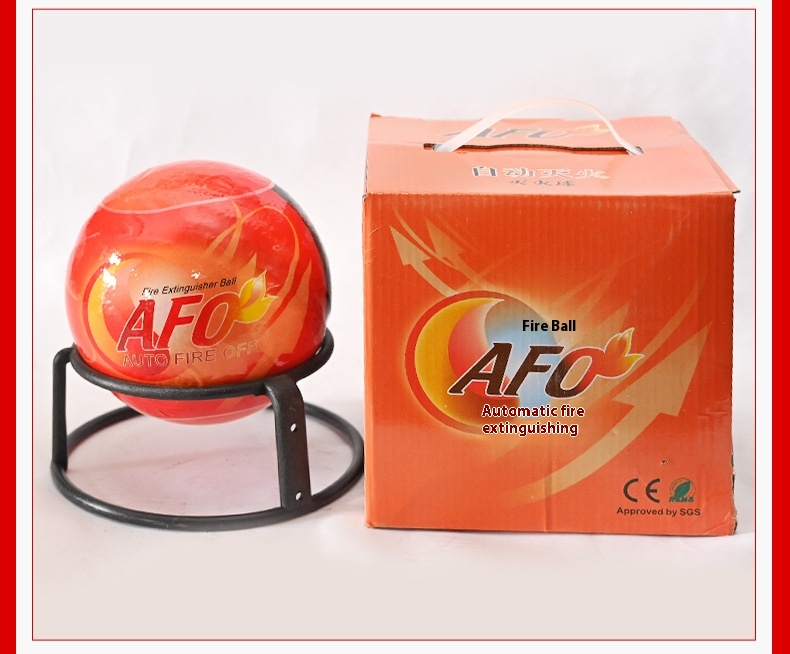
The fire extinguishing ball is one of the most chemically sophisticated passive fire suppression tools available today. Unlike conventional extinguishers that require human activation, the fire extinguishing ball responds autonomously to flame contact, triggering a rapid chemical reaction that smothers the fire within seconds. Understanding the science behind this device helps industries, safety officers, and facility managers make more informed decisions about fire protection strategies.
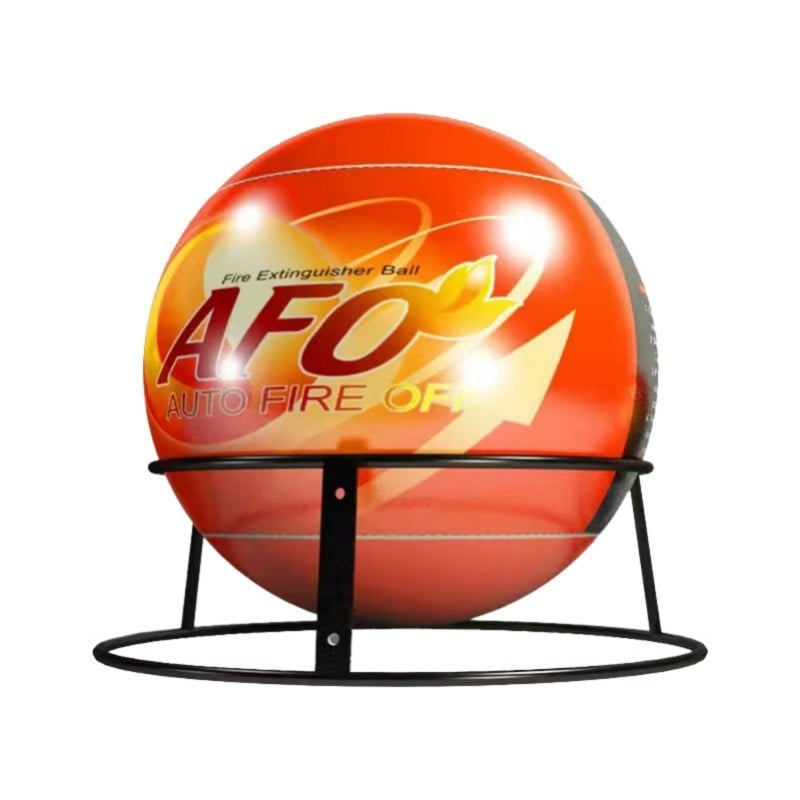
At its core, the fire extinguishing ball combines material science, thermochemistry, and reactive powder engineering into a compact, deployable sphere. When a fire extinguishing ball comes into contact with an open flame, the outer shell heats rapidly and fractures, dispersing a cloud of ABC dry powder that interrupts the combustion triangle. This article explores the chemical mechanisms, the reactive agents involved, and why the fire extinguishing ball works so effectively across diverse fire classes.
The Chemical Composition of a Fire Extinguishing Ball
ABC Dry Powder and Its Suppression Role
The primary suppressive agent inside a fire extinguishing ball is monoammonium phosphate, the active component in ABC dry powder. When the fire extinguishing ball ruptures under heat, this powder disperses as a fine aerosol cloud. Monoammonium phosphate thermally decomposes at elevated temperatures, releasing ammonia gas and metaphosphoric acid. These decomposition products coat fuel surfaces, creating a non-flammable layer that cuts off oxygen access and terminates the chain reaction sustaining combustion.
The fire extinguishing ball relies on a multi-mechanism suppression model. The dry powder cloud simultaneously cools the flame zone, dilutes the surrounding oxygen concentration, and applies a chemical inhibition effect on free radicals. Free radicals are highly reactive molecular fragments that propagate the combustion chain. By neutralizing these radicals, the fire extinguishing ball interrupts the fire at a molecular level, not merely at a surface level. This is why the fire extinguishing ball is classified as effective against Class A, Class B, and Class C fires.
The Outer Shell and Thermal Trigger Mechanism
The outer shell of a fire extinguishing ball is typically manufactured from a thermally sensitive composite material that fractures at a specific ignition temperature threshold, often around 100 to 130 degrees Celsius. This controlled fragmentation is a critical part of the fire extinguishing ball design. The shell is engineered to shatter evenly and directionally, ensuring maximum powder dispersal rather than projectile fragmentation. The chemistry of the shell material is calibrated so the fire extinguishing ball does not trigger prematurely from ambient heat or industrial warmth, but activates reliably upon direct flame contact.
The Physics of Rapid Dispersion and Fire Suppression
Powder Cloud Formation and Coverage Radius
When a fire extinguishing ball activates, the internal pressure generated by the decomposing powder agents propels fine particles outward at high velocity. This creates a three-dimensional suppression cloud that can cover a radius of several square meters depending on the fire extinguishing ball size and formulation. The particle size of the dry powder matters enormously here. Finer particles increase the surface area in contact with combustion gases, improving chemical inhibition efficiency. The fire extinguishing ball is designed to produce an optimal particle size distribution that maximizes both coverage and suppression speed.
The fire extinguishing ball typically achieves full discharge within 15 to 30 seconds, a window aligned with the critical early stage of fire development. During this stage, the fire extinguishing ball can suppress a blaze before it transitions into a fully developed fire that would demand far greater suppression resources. This rapid discharge timeline is a direct result of the internal pressure chemistry and the shell fracture mechanics designed into every fire extinguishing ball unit.
Heat Absorption and Flame Cooling
Beyond chemical inhibition, the fire extinguishing ball also suppresses fire through endothermic reactions. As the dry powder absorbs heat during decomposition, the flame temperature drops below the ignition point of the surrounding fuel. This thermal cooling effect complements the radical inhibition mechanism, making the fire extinguishing ball doubly effective in enclosed or semi-enclosed environments where heat accumulates. The combined thermochemical action of the fire extinguishing ball distinguishes it from simpler suppression methods like water or foam, which only cool or smother but do not chemically interrupt the combustion process.
Why the Science Makes the Fire Extinguishing Ball Reliable
Self-Activation Without Human Error
One of the scientifically significant advantages of the fire extinguishing ball is that its activation mechanism is entirely physical and chemical rather than electronic or mechanical. There are no sensors to malfunction, no circuits to fail, and no human judgment required. The fire extinguishing ball responds purely to heat and flame, which are the very conditions that define a fire. This scientific simplicity translates into extremely high deployment reliability. In industrial facilities, server rooms, and storage environments, the fire extinguishing ball can be placed in high-risk zones where human access during a fire event may be impossible or dangerous.
Stability During Storage and Non-Activation Conditions
The chemistry of the fire extinguishing ball is also designed for long-term stability. The dry powder formulation inside the fire extinguishing ball is hygroscopically treated to resist moisture absorption, which would otherwise cause caking and reduce dispersal efficiency. The outer shell of the fire extinguishing ball maintains structural integrity across a wide range of ambient temperatures during storage. This chemical and material stability means the fire extinguishing ball retains its functional readiness over extended periods without requiring pressurized maintenance, inspection valves, or recharging cycles, unlike traditional cylinder-based extinguishers.
FAQ
What chemical agent does a fire extinguishing ball typically contain?
Most fire extinguishing ball products use monoammonium phosphate-based ABC dry powder as the primary agent. This chemical thermally decomposes upon heat exposure, releasing compounds that interrupt combustion chain reactions, coat fuel surfaces, and reduce flame temperature simultaneously. The fire extinguishing ball is rated for Class A, B, and C fire categories because of this broad-spectrum chemistry.
How does the fire extinguishing ball activate without electronics?
The fire extinguishing ball activates through a purely thermochemical mechanism. The outer shell is formulated to fracture at a defined heat threshold corresponding to direct flame contact. No electronic sensor, battery, or mechanical trigger is needed. The fire extinguishing ball relies entirely on the thermal energy of the fire itself to initiate its suppression response, making it fail-safe by design.
Can the fire extinguishing ball be used in enclosed electrical equipment areas?
Yes, the fire extinguishing ball is well-suited for enclosed electrical environments such as switchboards, control panels, and server racks. ABC dry powder is electrically non-conductive at standard voltages, making the fire extinguishing ball safe to deploy in Class C scenarios involving energized equipment. However, post-activation cleanup is required because the powder residue from the fire extinguishing ball can coat sensitive components and should be removed promptly after suppression.

