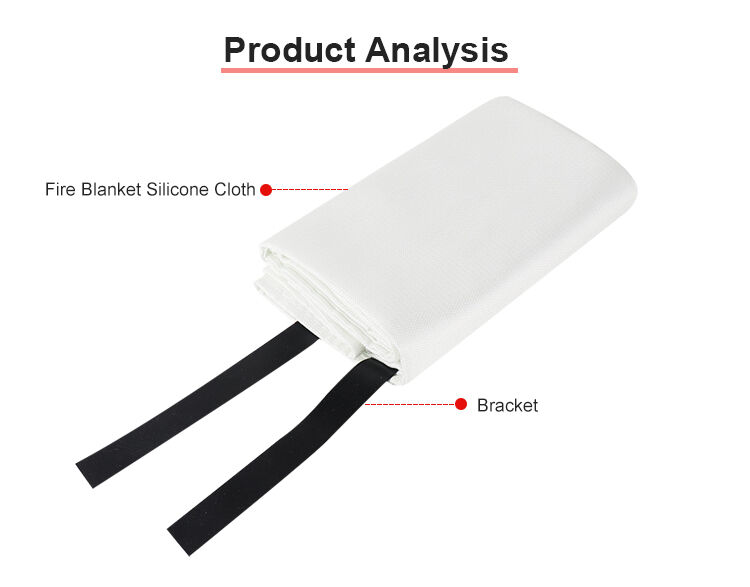
Universal Compatibility Across Battery Technologies
Battery fire blankets demonstrate remarkable versatility through their ability to effectively suppress fires across virtually all battery technologies and configurations currently in use. This universal compatibility stems from the fundamental physics of fire suppression rather than battery-specific characteristics, making these blankets equally effective for lithium-ion, lithium-polymer, nickel-metal hydride, and lead-acid battery emergencies. The blanket's oxygen-deprivation mechanism works consistently regardless of the underlying battery chemistry, ensuring reliable protection across diverse applications and industries. Size flexibility represents another crucial aspect of universal compatibility, with battery fire blankets available in multiple dimensions to accommodate everything from smartphone batteries to large-scale electric vehicle power packs. Small blankets measuring 1x1 meter provide adequate coverage for consumer electronics and small power tools, while industrial-sized options extending to 6x8 meters can completely envelop electric vehicle batteries or large energy storage installations. This size range ensures appropriate coverage for virtually any battery fire scenario users might encounter. The deployment methodology remains consistent across all battery types and sizes, eliminating the need for specialized training or equipment selection based on specific battery technologies. Users develop a single set of skills applicable to all potential battery fire emergencies within their environment, improving response times and reducing the likelihood of deployment errors during high-stress emergency situations. This consistency proves particularly valuable in mixed-technology environments where various battery types coexist. Industrial facilities benefit significantly from this universal approach, as a single inventory of appropriately sized battery fire blankets provides comprehensive protection across diverse battery-powered equipment and systems. Manufacturing plants, data centers, and logistics facilities often utilize multiple battery technologies simultaneously, making universal compatibility essential for cost-effective safety planning. The ability to standardize on a single suppression technology simplifies procurement, training, and maintenance procedures while ensuring comprehensive protection across all potential fire scenarios.

 EN
EN